
When the Research Feels Fine but You Don’t
Postgrad stress is real, it’s widespread, and it’s not a sign that you’re failing. If you’re currently staring at a chapter that won’t come together, sleeping badly, or quietly wondering whether you’re cut out for this, you’re not alone. Marshall et al., in their 2026 exploratory case study published in Frontiers in Education, found that postgraduate students face a distinct set of pressures, the combination of intensive academic demands, identity uncertainty, and limited peer community creates a particular kind of strain that undergraduate support structures simply weren’t built for. That’s worth sitting with for a moment.
Managing postgrad stress starts with naming what’s actually wrong
Most postgrads carry a vague, heavy sense that something is wrong. However, that vague feeling is much harder to act on than a specific one. So try this: write down, in plain language, the three things that are most draining you right now. Not academically, personally. Is it isolation? Feeling like a fraud? Supervisor dynamics? Financial pressure? Uncertainty about what comes next?
Once you name it, you can do something about it. For example, if it’s isolation, that’s a social problem with social solutions, a writing group, a regular coffee with another postgrad, even an online community in your field. If it’s imposter syndrome, that’s a cognitive pattern you can actively work with, not a verdict on your ability. Naming the problem correctly is, genuinely, half the work.
Your body is not a productivity machine you can ignore
This is the opinion that might surprise you: rest is not a reward for finishing work. It’s a condition for doing work at all. Postgrad culture often treats exhaustion as evidence of commitment. It isn’t. It’s evidence of poor resource management, and your most important resource is you.
The research on stress and student performance consistently shows that sleep deprivation and chronic anxiety reduce cognitive function, including exactly the kind of analytical and writing capacity your dissertation demands. Therefore, treating sleep, movement, and food as optional extras is not noble dedication. It’s self-sabotage with good PR.
Three concrete things you can do this week. First, protect at least one full evening where you don’t open anything research-related. Not to be lazy, to let your brain consolidate what it’s already processed. Second, move your body in some way every day, even a 20-minute walk. The dopamine and noradrenaline effects on fatigue are well-documented in exercise research, and even light activity helps regulate stress hormones. Third, if you’re in the UK, check whether your institution has a counselling service with specific provision for postgraduate researchers. Many do. Many students never use it because they don’t think they’re struggling enough yet. You don’t need to be in crisis to ask for support.
When it all feels too much
There’s a particular low point that many postgrads hit, usually somewhere in the middle of the project, when the initial excitement has worn off and the end still feels impossibly far away. In addition to the practical strategies above, it helps to have a brutally honest conversation with yourself about expectations.
Your dissertation does not need to be perfect. It needs to be finished and defensible. Those are very different standards, and confusing them is one of the most reliable routes to paralysis.
Also, talk to your supervisor. Not just about your work, about how you’re managing. A good supervisor wants to know. A difficult supervisor still needs to know, because your wellbeing affects your output and your timeline, and that affects them too.
Postgrad stress doesn’t disappear when you submit. However, it does become manageable when you stop treating it as something to push through alone and start treating it as a problem that deserves the same rigorous attention you give your research.
What’s the one thing you’ve been telling yourself you’ll deal with after you finish the next chapter? Because that chapter isn’t going anywhere, and neither is the problem.
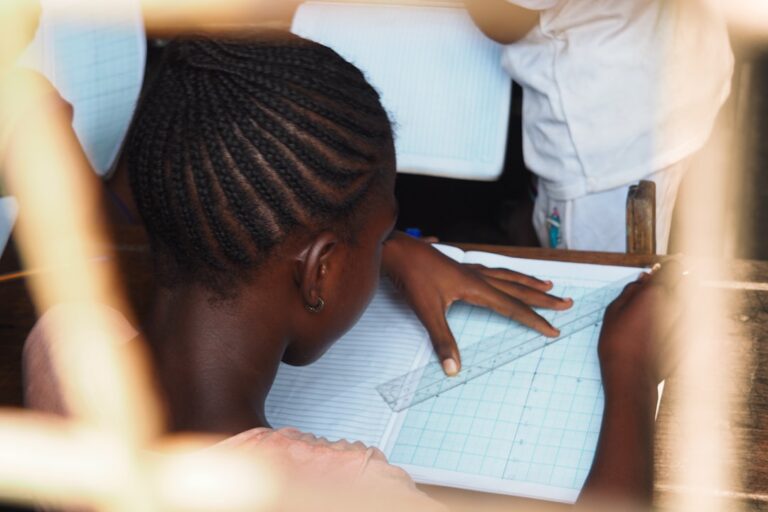
Image: Photo by Maxim Tolchinskiy on Unsplash
Explore more insights at Research Partners.